This section will explore themes across the States.
Interviews from five states were selected for closer scrutiny. These states were selected because they contained a sufficient amount of interviews for exploration via Voyant, and the interviews also contained accurate birth date and birth place information.
For this project a total of 153 interviews were used, 29% were individuals from Mississippi:
Alabama (29 Interviews)
Georgia (24 Interviews)
Mississippi (44 Interviews)
North Carolina (27 Interviews)
South Carolina (29 interviews)
Figs 1 & 2 show the distribution of the interviews and the vocab density and length of each the state contributions.
What are the Stories in the States?
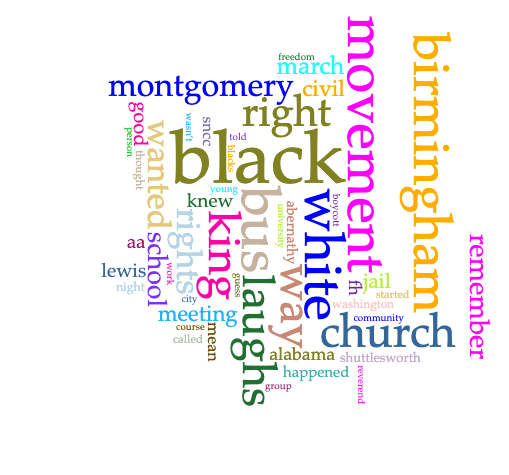
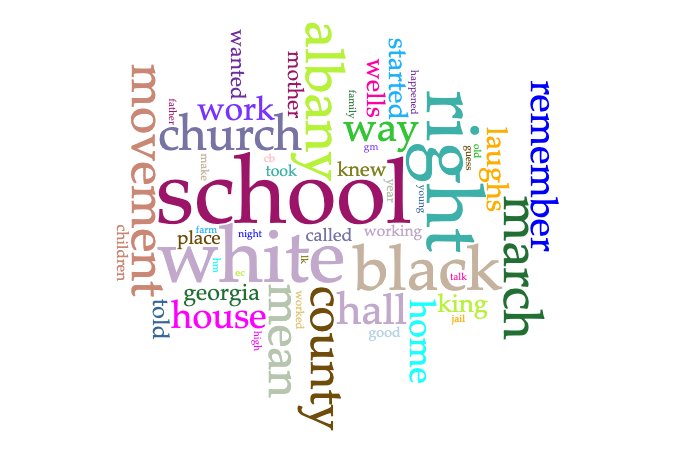
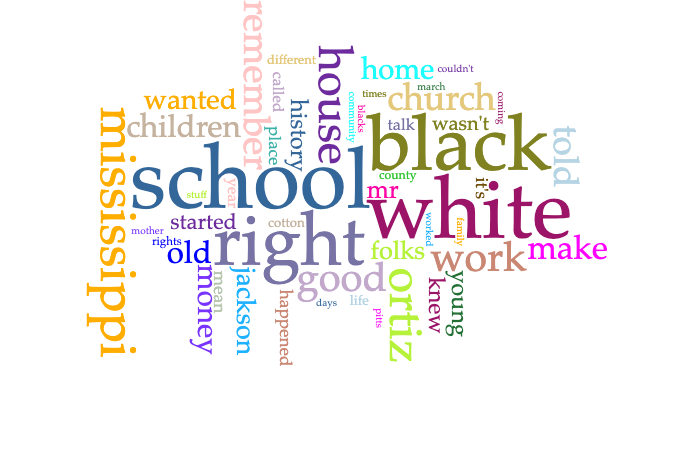
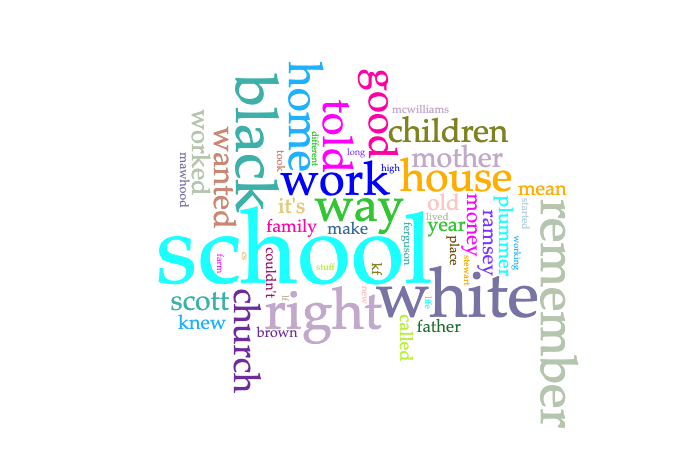
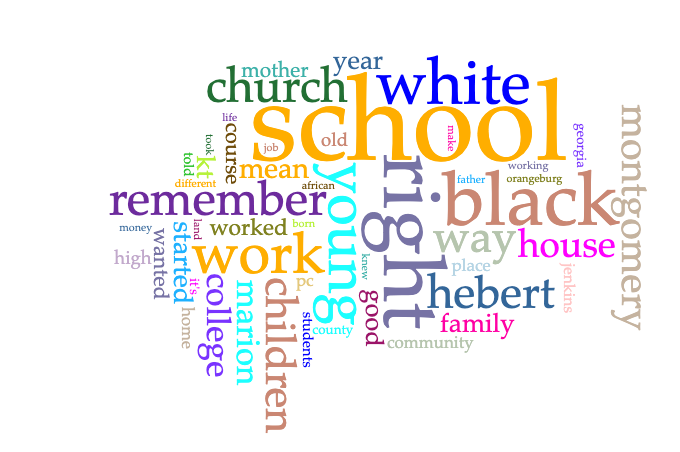
Interviewees in all the states except Alabama, speak of events and issues related to ‘school’. In Alabama, words relating to key . monumental events appear more frequently: the Montgomery bus boycott, Birmingham church bombing, and Martin Luther King are the words that permeate the Alabama interviews. North and South Carolina have the most emphasis on School issues, with South Carolina individuals speaking of their experience in college more frequently than participants from other states.
Fig.1
Fig.2
Most Frequently Used Words Across Five States
School and Activism Vs School and Community
Exploring the context in which individuals spoke of ‘school’, Alabama paints a different picture, showing that references to ‘school’ occurred less frequently in those interviews, than interviews from the other states. Looking at the interviews from Alabama, only one interview mentions ‘school’ significantly more often than all the other Alabama interviews, and this interview is from Earnest Green, one of the first black students to attend Little Rock Central High School in 1957.
School Activism: Words: School -Movement-Jail
School Community Words: School -church-work-community-college
The above figures show the relative frequencies of word “school” and words that relate to themes of ‘activism’ and themes of community. This implies that themes relating to the movement, protests, jail are more prominent in interviews from Alabama, Georgia and Mississippi, than they are in the interviews from the Carolina’s, where school equity appears to be a more critical issue.
Further Explorations
The discovery has just begun. This tool can be used to examine questions pertaining to land, work and the place of church in the communities. How did these differ from state to state? How did the experiences of African Americans vary across the Southern States? One question remains: “Will looking at interviews from all these diverse collections bring new insight or confirm what we already know about life in the southern states during the Civil Rights era?
