These four collections are just a small portion of the many interviews and personal narratives that focus on the Civil Rights era. The purpose of Behind the Veil is to “preserve the living memory of African American life during the age of legal segregation” and the collection has currently digitized 410 of the 1,260 interviews from eleven states the majority coming from North Carolina. Somebody Had To Do It explores school desegregation in South Carolina and the Southern States and is funded by the Humanities Council of South Carolina. Eyes on the Prize was funded by the Mellon Foundation and the National Historical Publications and Records Commission, focuses on individuals who were actively involved in the Civil Rights Movement and contains interviews that were part of a PBS documentary on the Civil Rights Movement. The Civil Rights History Project is the responsibility of the Library of Congress (LOC) and the Smithsonian Institution’s National Museum of African American History and Culture (NMAAHC), both charged with the acquiring and preserving “oral history collections with relevance to the Civil Rights movement”.
For this project interviews from each collection were combined to form one document. The Voyant summary below shows the word count and vocabulary density in the collections. Indicating that the collections with the most interviews and most complex vocabulary are Behind the Veil (60 Interviews) and Civil Rights History Project (55 Interviews); and the collections with the lowest number of interviews and less complex vocab as Eyes on the Prize (45 interviews) and Somebody Had To Do It ( 9 interviews).
What are the collections about?
Looking at word frequencies, it’s not surprising that the focus of the interviews is on race and relationships. Across all the corpus of the collections, interviewee references to “School” abound, and interviewees speak of relationships between black and white people, school issues, church, home and work. Things that impact their lives and the community.
Comparing the word clouds below while using Voyant Context tool to examine how the words were used, we see that discussions about school occur most frequently in the Somebody Has To Do It collection. The focus of this collection is school desegregation. These interviews speak of high school experiences, parent relationships with school administration, and children’s experiences on the school buses. The Civil Rights History Project interviews narrate stories about school in relation to higher education. The interviewees talk about going to Law School and their involvement and relationship with historically Black Colleges (HBC)
Eyes on the Prize participants do not talk about school as often as individuals in the other collections. Probably because the focus of this collection is on the activists and events that were prominent in Civil Rights Movement. Participants seem to recount incidents that relate to specific events that had significant National impact. A closer look at context of these school stories reveals that they focused on school closing, specific marches, protests, and visits from influential people. Interviews in the other collections have a broader scope and include more personal experiences about daily life and stories.
1.
3.
>1. Eyes on the Prize (Upper) 3. Somebody Had To Do It (lower)
2.
4.
2. Civil Rights History Project (Upper) 4. Behind the Veil (Lower)
School: spaces of activism and community
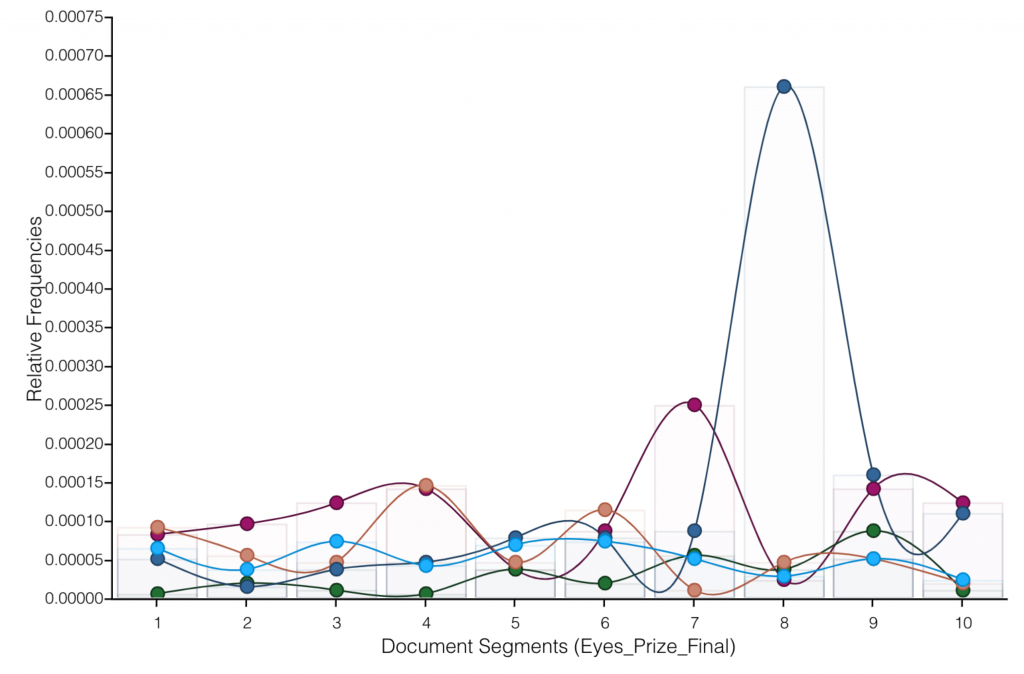
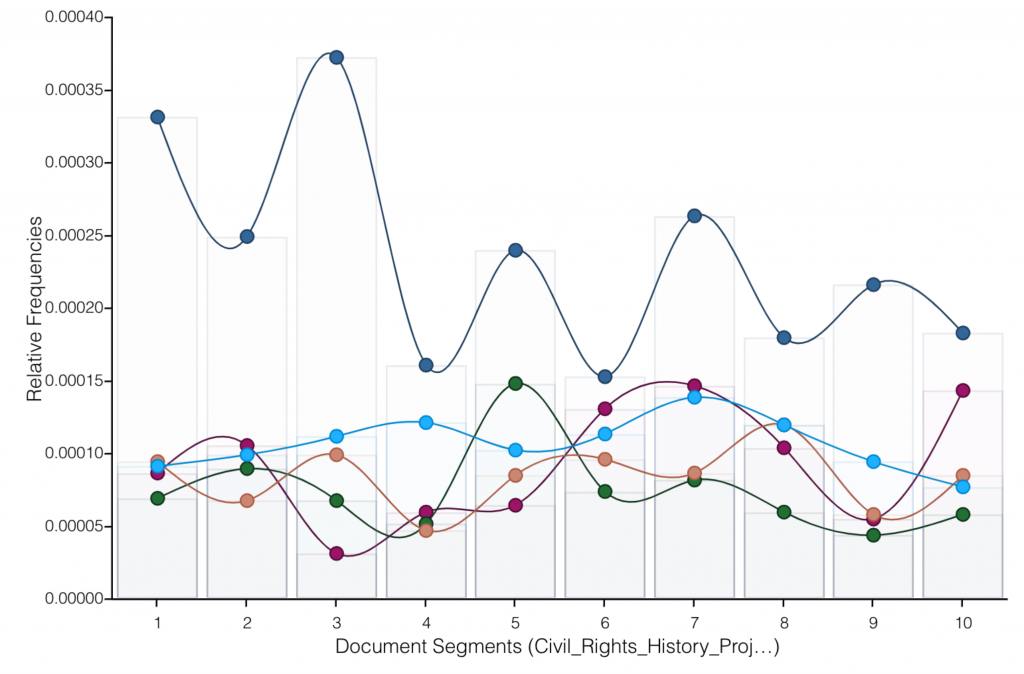
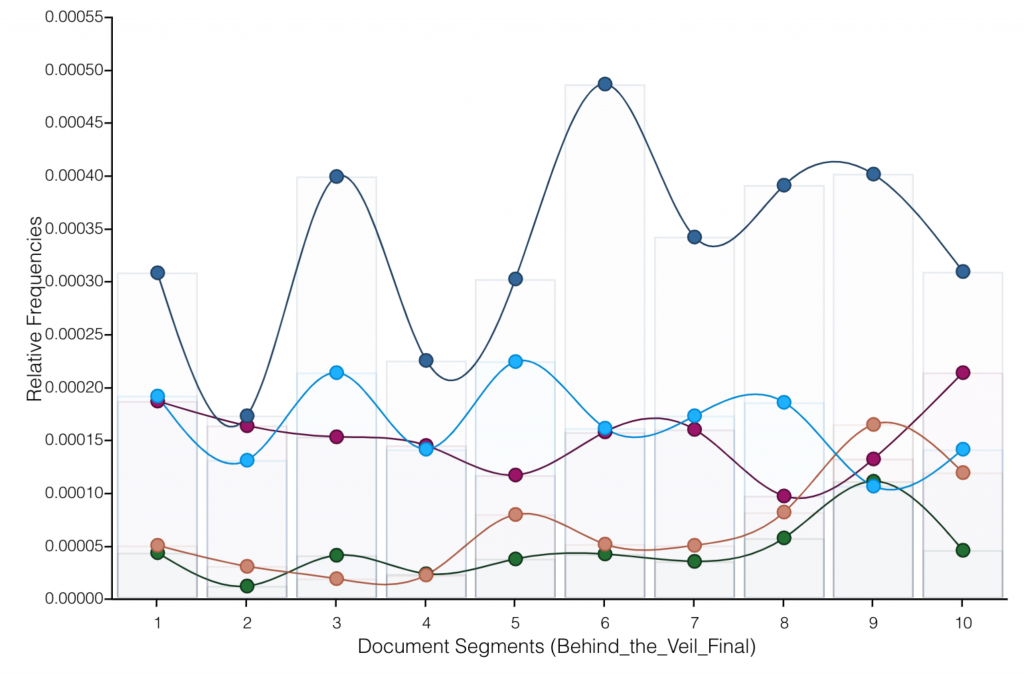
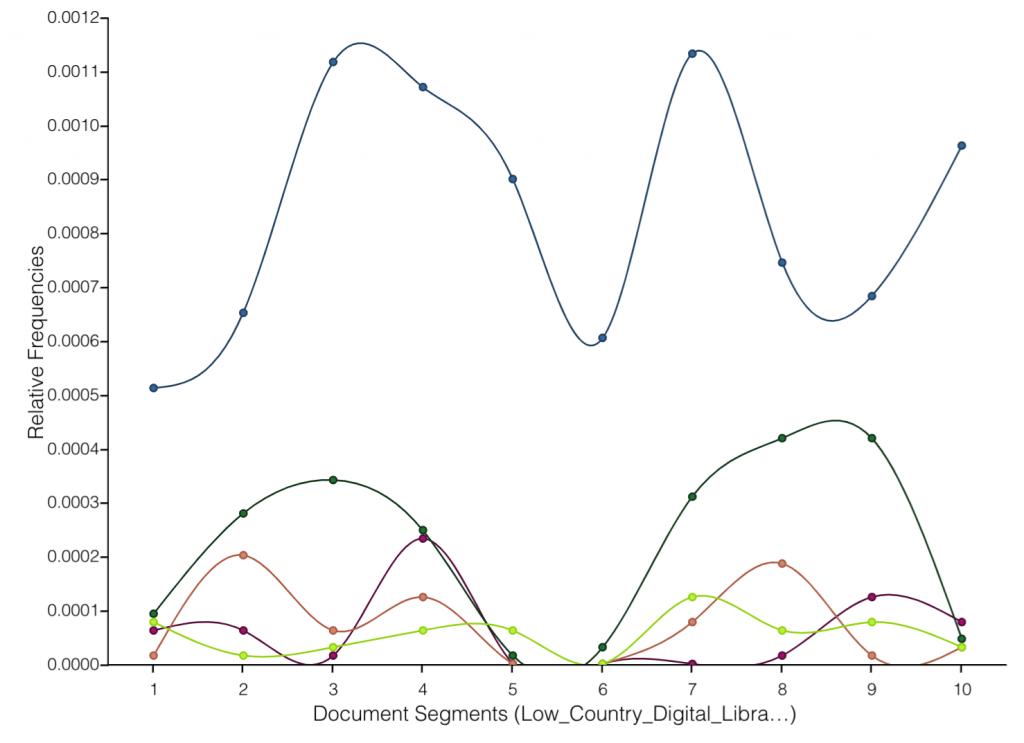
The word ‘school’ is recurring part of a theme throughout all the collections. The the trends diagrams below (Fig. 1 & 2) confirm that the Eyes on the Prize Collection has the lowest frequency of the word ‘school’ and the two collections from the Carolina’s show the highest frequencies. The visualizations explore the distributions of groups of words that I focused on that articulate themes of activism and community.
Fig.1 School and Activism
Fig.2 School and Community
To explore the relationship of school activism I looked at the frequencies ( Fig. 1) and correlations between the words School- Movement and Jail. To explore the theme of school and community, I explored the frequencies (Fig. 2) and correlations between the word -school-work-church-community-college.
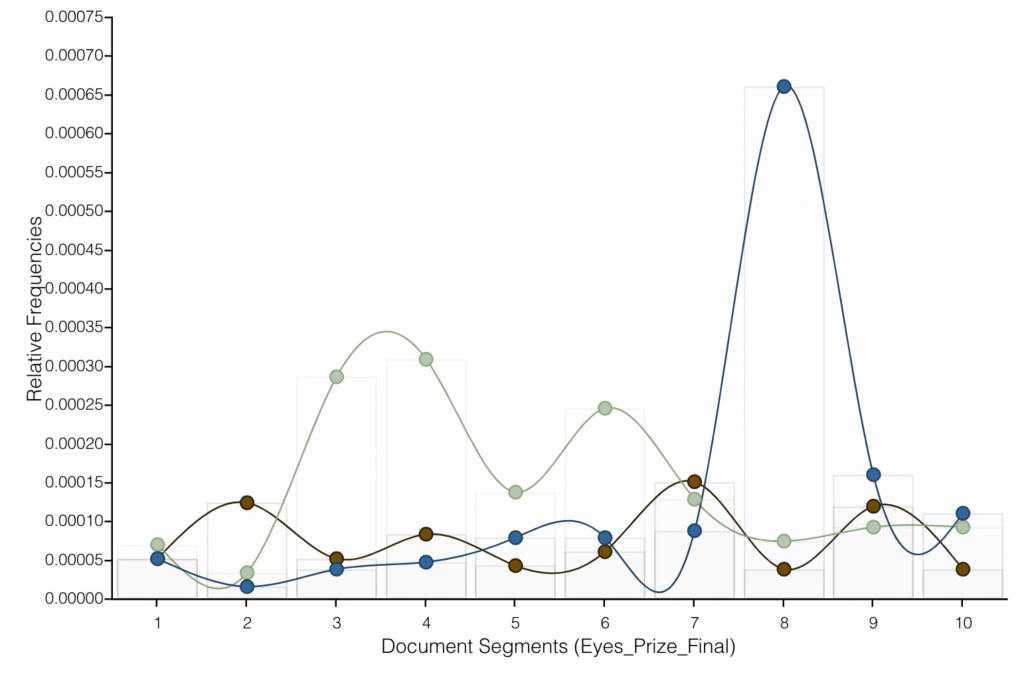
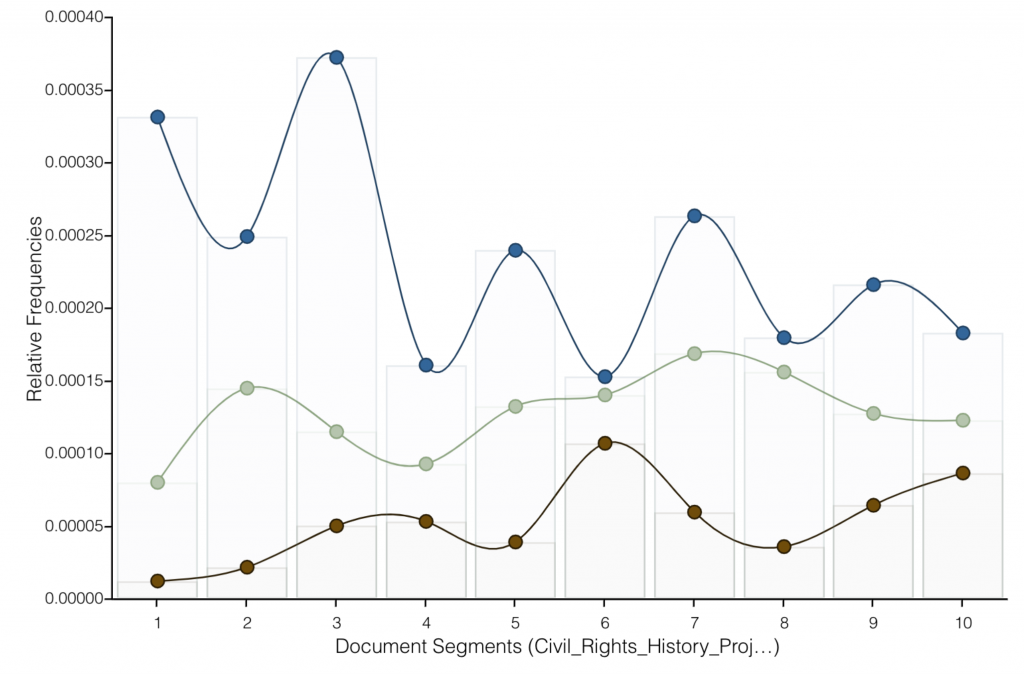
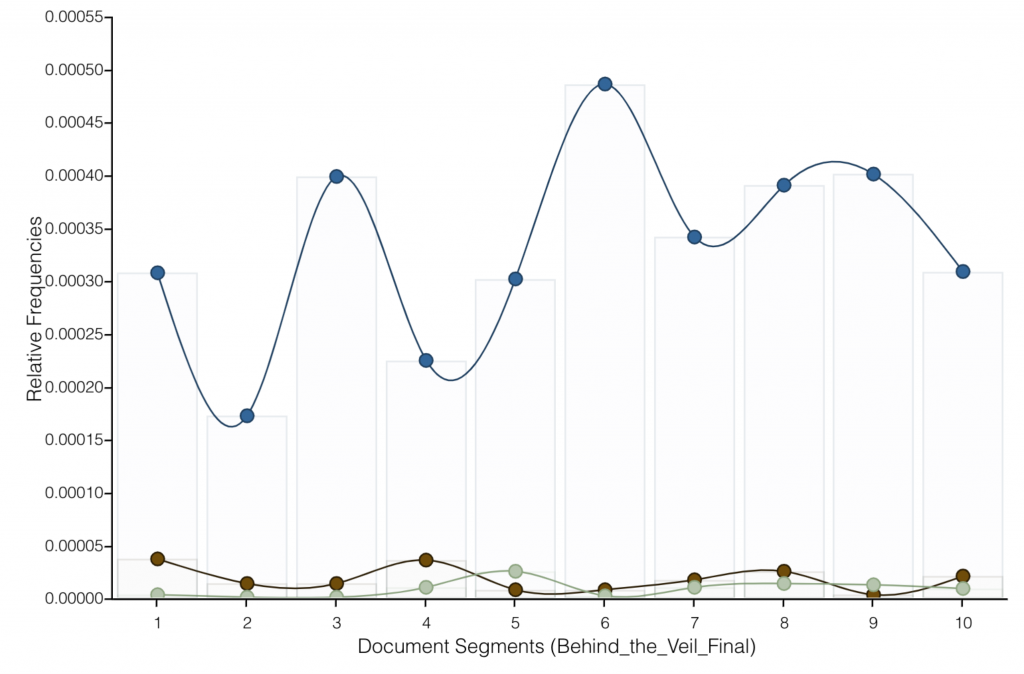
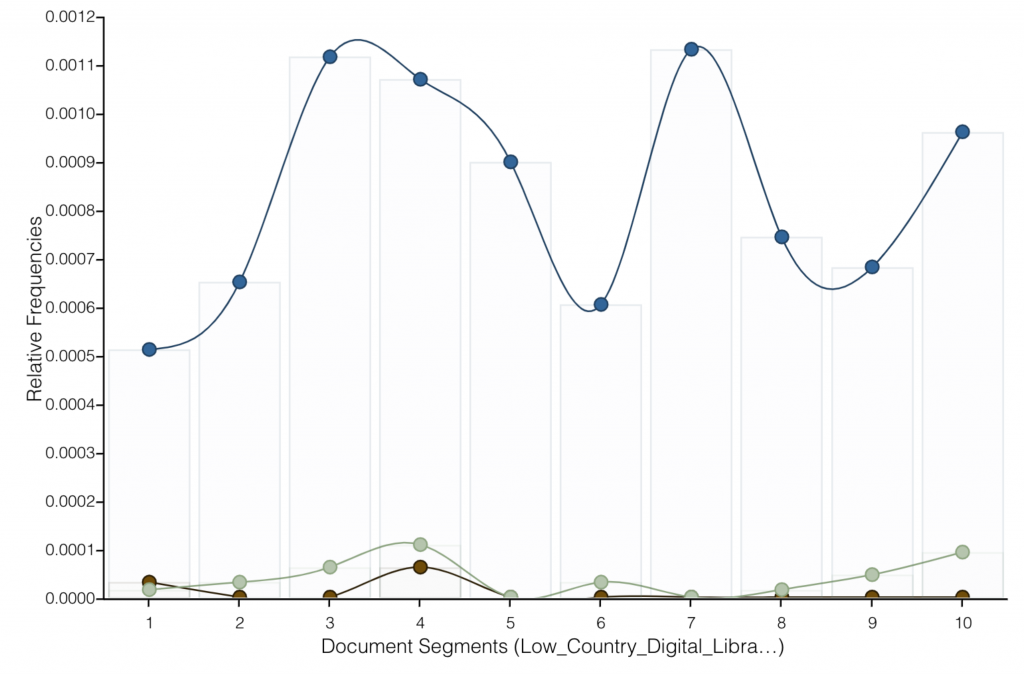
Interviewees in the Behind the Veil and Low Country Digital Library collections speak of racism and school desegregation issues more often that interviewees from the other collections. Specifically in the Low Country Digital Library interviews, where the focus is specifically school desegregation. They share stories about the difficulty in traveling to their local schools, moving in with relatives in order to be closer to better schools and the hostile environment that their children encountered in the desegregated schools. School stories in The Civil Rights History Project tells the story of their own experiences. They talk of their own academic careers as undergraduate and graduate students, as teachers and administrators in high school, college and graduate school. Many of these interviewees also talk of their experience with school administrators and teachers as they advocated for their own children.
| Term 1 | Term 2 | Correlation | Significance |
| movement | school | 0.12190804 | 0.16377264 |
| jail | school | 0.1013487 | 0.032758594 |
| work | school | 0.15060297 | 0.5777069 |
| college | school | 0.14384411 | 0.59762195 |
| community | school | 0.11954592 | 0.2093083 |
| church | school | -06167792 | 0.38322082 |
Although the table above shows that the words have very little if any correlation at at all (Fig 5.). The trends diagram (Fig. 4) revel that The Eyes on the Prize interviews show that one particular segment ( segment 8- Fig 5) of the interviews is responsible for the exceptionally high frequency of references to school in that corpus of documents. It is difficult to identify the reason for this spike in this particular group of interviews, but it is significant enough to warrant a close reading of these interviews.
Fig.5
