Lincoln Hospitality : The Carriger Family's Rooming House
Even though Lincoln was far from the south, legal segregation and discrimination were still practiced and overnight boarding opportunities were limited for black porters.
The porters rented rooms from African American residents in the city, and in Lincoln, Myers in Remembering the Path to ‘T’ Town describes a Rooming house, owned and operated by John and Alice Carriger ( part of the first families who settled in “T’ Town). This house served as the primary boarding house for the black porters during their layover in Lincoln . The boarding house was opposite the Lincoln Train Station, on South 9th Street in downtown Haymarket area of the city.
The Carriger’s were one of the first families that established and settled in ‘T’ Town. The family inherited the name of Godfrey Carriger, a slave owner who moved from Pennsylvania to Tennessee and is said to have owned slaves ten slaves when he lived in East Tennessee. (Myers, Remembering the Path to ‘T’ Town Chp.4).
Alice Carriger was born November 10, 1868 and she married her first cousin John Carriger in St Andrew, Missouri in 1886. Their fathers Samuel and Christopher were brothers.
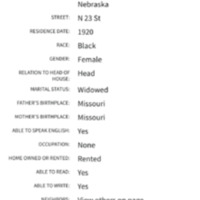
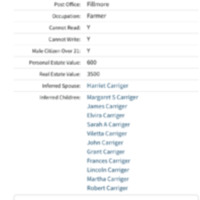
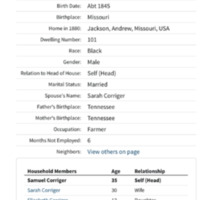
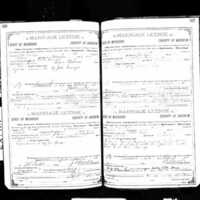
Census Records of the Carriger family.
Alice and John, run a Rooming House across from the train station in Lincoln, on [South] 9th Street ( although recorded in Myers et al as South street, this may be refering to the station on N. 7th Street in between Q and P streets see The Burlington Northern railroad Depot/Lincoln Station @ https://downtownlincoln.org/go/burlington-northern-railroad-depot-and-lincoln-station). For fear that the house would be seen as a place of disrepute, the Carrigers were determined to maintain high standards Myer’s explains that
“ they were careful about their image in the community and laid down strict rules for male tenants, “no women or alcohol upstairs.” This was to avoid any impression that the Rooming House was a “house of ill repute.”
It was common for some Rooming Houses during the 1920’s and 30’s to be engaged in illegal activities however, the Carriger Rooming House was known as a clean, decent place where Pullman Porters could rest during their “stop-overs.”
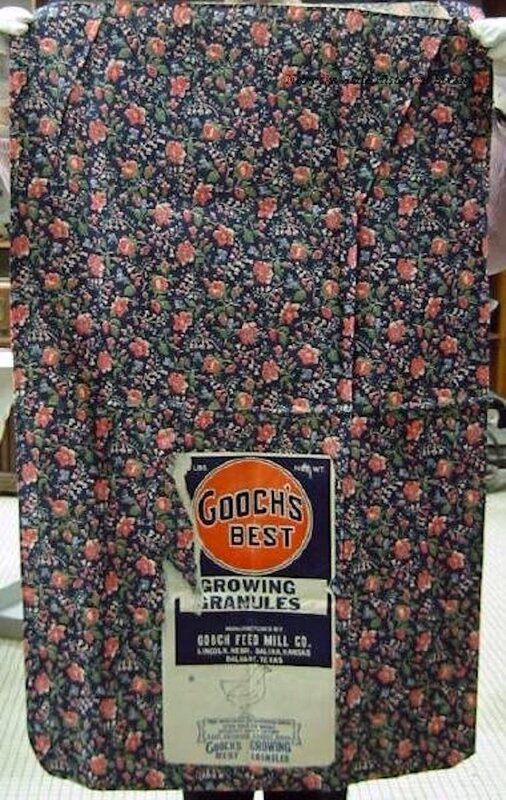
The community and the Carrigers also benefited from these respected visitors in ways other than their patronage. Alice and her two daughters – Lula and Elnora and her sister Blanch were businesswomen and designed and made ‘Feed Sack Fashion’- from the Feed sacks of the nearby Gooch Feed Mill. The Lincoln Porters made extra money buying and selling these hand towels, pillowcases and women’s underwear to passengers on the trains until this was prohibited by the company.
The ability of the Rooming House to survive the depression, is largely credited to the patronage of these Pullman Porters and the establishment of Lincoln as a hub for the Burlington and Union Pacific railroads.
Other Rooming Houses Managed By African Americans.
Ola Baker. 720 Q Street
George and Clara Wlison 412 S R Street
A.G. Smith. 1039 North 11th Street
Pearl Chrisman 218 North 10th Street.
Georgie D. Streeter. 336 North 7th Street.
Sources
Myers, Roy J. and Stephanie E. Myers. 2014.Remembering the Path to T-Town: Migration of an African American Family through Seven States to Lincoln, Nebraska 1720-1940. R.J. Myers Publishing Company
Ancestry.com. 1930 United States Federal Census [database on-line]. Provo, UT, USA: Ancestry.com Operations, Inc., 2010. Images reproduced by FamilySearch.
Ancestry.com. 1920 United States Federal Census [database on-line]. Provo, UT, USA: Ancestry.com Operations, Inc., 2010. Images reproduced by FamilySearch.