The Porter's work is never done.
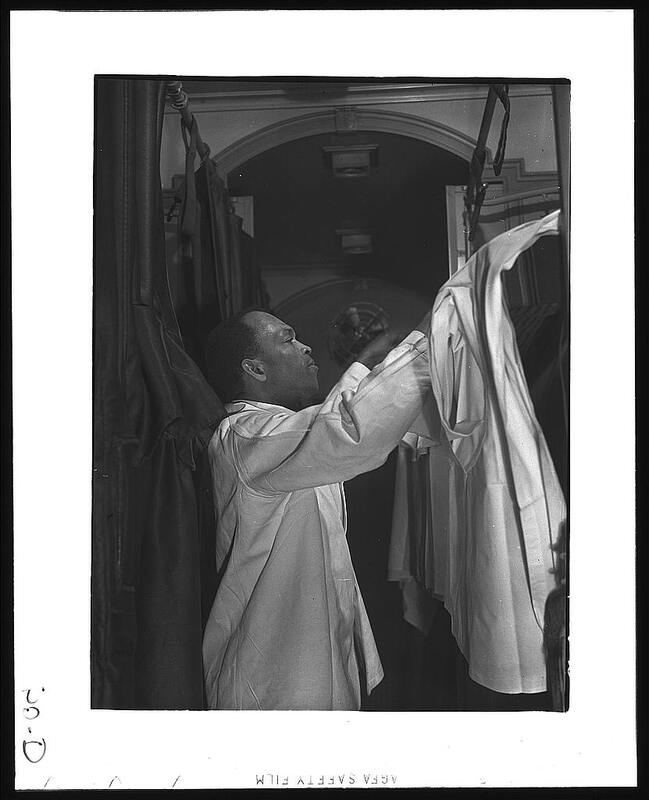
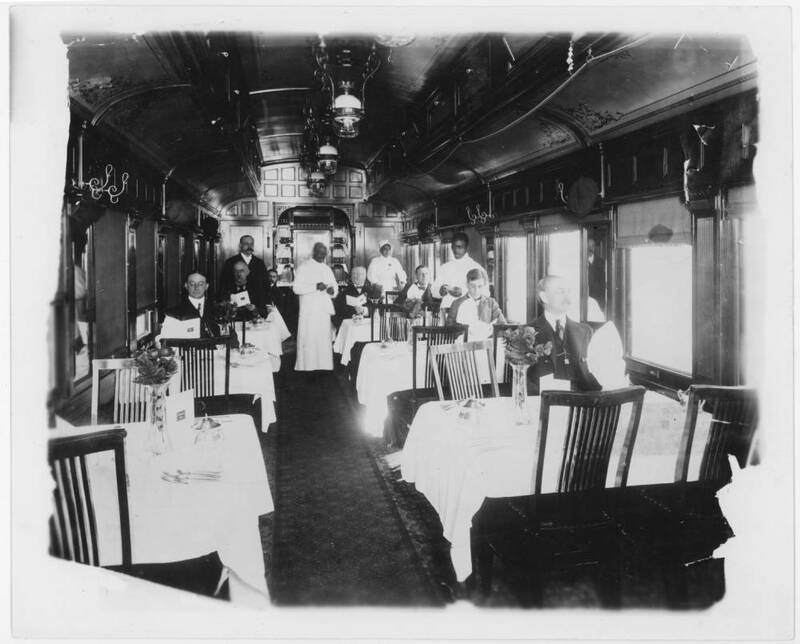
The Pullman Porter was highly respected in the community because comparatively, it was one of the better paid jobs available to African American men at that time. Coming out of hard labour of slavery, the work of the porter, and travel involved proved to be a much desired alternative to the other availble jobs for African American's, that were in the field or in the factories. In Johnson’s “The New Negro Movement in Lincoln, Ne’ the photograph of George W. Butcher in his porter uniform, according to Monica Miller, exudes “self-respect and community pride’, the porter was a valued member of the community. These jobs were highly coveted and inspite of the low salary and poor working conditions, the porters supplemented the salary with tips and other money -making opportunities and supported their extended families and the community. The Pullam Company made sure that the pay was just below minimum wage to ensure that the workers would keep the passengers happy and do anything to make a tip, and prevent them from being fired. Porters were willing to work under any conditions, regardless of treatment or pay and the company took advantage of that.
"The Price of Pride"
Tipping became prevalent in the USA after the Civil war when the enslaved population created a new workforce. Large cities used this cheap labor and this workforce received their wages solely through tips. Back in 1916 William Rufus Scott sought to expose the degradation of tipping, and attempted to end it through his manuscript, “The Itching Palm” which was provocative study of tiping in America. Given a menial salary to keep them committed to the workforce. Porters were slaves to the ‘tip’. In order to earn a decent living, according to Scott, the negro worker had an “itching palm” waiting to live off the handouts from the ‘master’. He exposed the exploitative nature of tipping and advocated that everyone should be paid a livable wage. The tip was the wage the Porter received for his pride what “ what one American is willing to pay to induce another American to concede to inferiority” and the Porter was not ignorant of this reality.
Lowest Pay for the Longest Hours
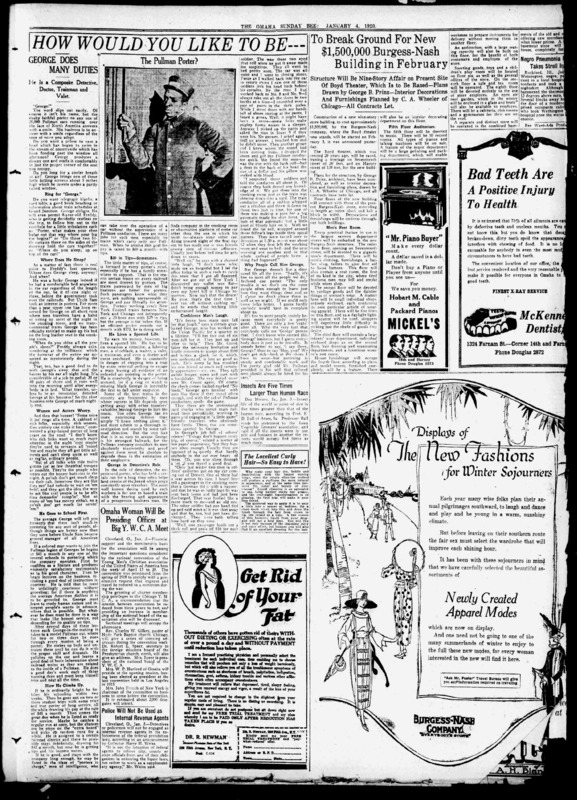
In 1914, the top pay for a Pullman Porter was $27.50 a month and conductors started at $70/month and after 10 years could earn their maximum of $95/month (Chicago Day Book. Jan, 19, 1914). The work of the porter was to serve and indulge the passengers they were to be invisible and nameless. The remnants of slavery lived on and porters were most often referred to as “boy” or “George”, after the pattern of slaves being named after their master, in this case George Pullman. The Omaha Sunday Bee describes in detail the work and abuse the Pullman porter encountered, from the mocking of the children, to constant ringing from the women during the night, ensuring that the porters were constantly working throughout the day and night with little thanks or gratitude. ("How Would You Like to Be -- George has many duties."Omaha daily bee. 04 Jan. 1920.)
Professional and Proud.
Still with this treatment, the quality of their work, although unrewarded, could not be denied. They commited to proivding quality service and it was consistently reported that the Pullman Porters were the 'most polite, attentive, curteous and obliging class of men on the railroad' (Chicago Day Book. May 11, 1915). Maud Ballington Booth, President of the Volunteers America in 1915, applauded the "courtous , obliging and honorable character" of the Pullman Porter using them as model examples to prisioners. drawing attention to how they never used their position to take advantage of femaie passengers.
Porters often used signs and signals between them to identify difficult or abusive passengers . The shoe shiners were the most vigilant and notched the heels of the passenger’s shoes to indicate mark rich businessman who refused to give adequate tips. Passengers were treated according to the “notch on the shoe heel”. The Pullman company employed ‘spotters’ to spy on the conductors and porters, little did they know that the porters were themselves keeping tabs on the spies and could not only identify the ’spies’ but could predict what kind of treatment they would receive, and be on their best behavior.
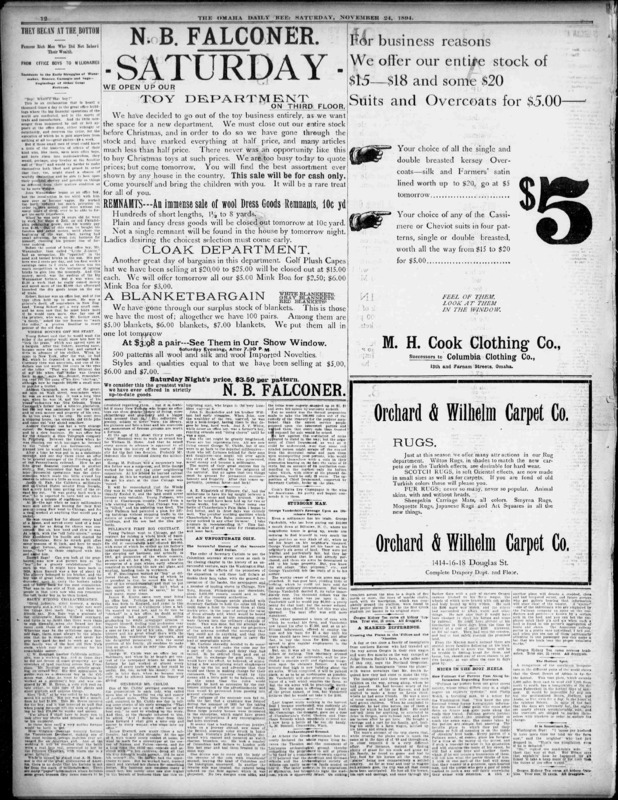
“ Every patron of a Pullman must, of course, place his footgear for a time at the mercy of the porter, and if such a traveler be wise in his generation and will examine the heels of his shoes, he will find a nick here and another there, which, if he can secure a translation of them, will tell him what the porter thinks of him. A nick in one part of the heel will mean that the wearer is a generous , open-hearted man, and the porter who gets a pair of heels marked in such a way will fairly overwhelm their owner with attention. A nick at another place will denote a crabbed, close and bad-tempered owner, and future porters who get gaiters hearing that information will steer clear of the wearer”
These Pullman Porters provided a service and were not oblivious of their treatment and inadequate wages, but worked honestly inspite of their treatment. They were not passive servants but professional service workers.
Sources
“Pullman Conductors and Porters Organize”. 1914. The Day Book (Chicago, Ill.), 19 Jan. 1914. Chronicling America: Historic American Newspapers. Lib. of Congress. <https://chroniclingamerica.loc.gov/lccn/sn83045487/1914-01-19/ed-1/seq-8/>
Nicks in the Boot Heels: How Pullman Porters pass on Information Regarding Travelers. Omaha Daily Bee. (Omaha [Neb.]), 24 Nov. 1894. Chronicling America: Historic American Newspapers. Lib. of Congress. <https://chroniclingamerica.loc.gov/lccn/sn99021999/1894-11-24/ed-1/seq-12/>)
"Short Ones" The day book. [volume] (Chicago, Ill.), 11 May 1915. Chronicling America: Historic American Newspapers. Lib. of Congress. <https://chroniclingamerica.loc.gov/lccn/sn83045487/1915-05-11/ed-1/seq-21/>
'Throughline': Why Tipping In The U.S. Took Off After The Civil War.
Abdelfatah, Rund., Arablouei, Ramtin. Moring Edition. National Public Radio. 2021 <https://www.npr.org/2021/04/01/983314941/throughline-why-tipping-in-the-u-s-took-off-after-the-civil-war >
Scott, William Rufus.1916 The Itching Palm: A study of the habit of tipping in American. Penn Publishing Company:Philadelphia. Project Gutenberg @ https://www.gutenberg.org/files/33170/33170-h/33170-h.htm#vii
George' has many duties. The hard work of the Pullman Porter. "Omaha daily bee. (Omaha [Neb.]), 04 Jan. 1920. Chronicling America: Historic American Newspapers. Lib. of Congress. <https://chroniclingamerica.loc.gov/lccn/sn99021999/1920-01-04/ed-1/seq- >
Delano, Jack. (1942). "Pullman porter making up an upper berth aboard the "Capitol Limited," bound for Chicago, Illinois". Library of Congress Prints and Photographs Division Washington, https://www.loc.gov/pictures/item/2017872916/